Sudden cardiac arrest (SCA) is a medical emergency where a person becomes unresponsive and is not breathing normally. In those first minutes, bystander action matters: calling 112/999, starting CPR (cardiopulmonary resuscitation), and using an AED (Automated External Defibrillator) as soon as it’s available.
If you’re searching for Cardiac First Responder Limerick, you’re typically looking for practical, guideline-aligned training that helps people respond quickly and correctly in a high-stress situation. Safetgroup.ie provides Cardiac First Responder training in County Limerick for workplace and community settings, centred on Basic Life Support (BLS) skills: CPR and AED use.
Book Cardiac First Responder training in Limerick with Safetgroup.ie. View upcoming course options and request a quote on our Training page: https://safetgroup.ie/training/
What “Cardiac First Responder” means in practice
A cardiac first responder is someone trained to deliver Basic Life Support: recognising a suspected cardiac arrest, starting CPR promptly, and using an AED. You do not need to be a clinician to use an AED—AEDs are designed to guide the rescuer with voice and/or visual prompts and only advise a shock when appropriate.
This training is relevant anywhere people gather, including workplaces, schools, sports clubs, gyms, hospitality venues, and public events.
The medically accurate essentials: CPR + AED
High-quality CPR and early defibrillation are central parts of modern resuscitation guidance. For adult Basic Life Support, key CPR quality targets commonly taught include:
- Compression rate: 100–120 compressions per minute
- Compression depth: at least 5 cm (often taught not more than 6 cm for adults)
- Full recoil: allow the chest to return fully between compressions (avoid leaning)
An AED analyses the heart rhythm and provides prompts to guide the rescuer. If a shock is advised, the AED will instruct when to stand clear and when to resume CPR.
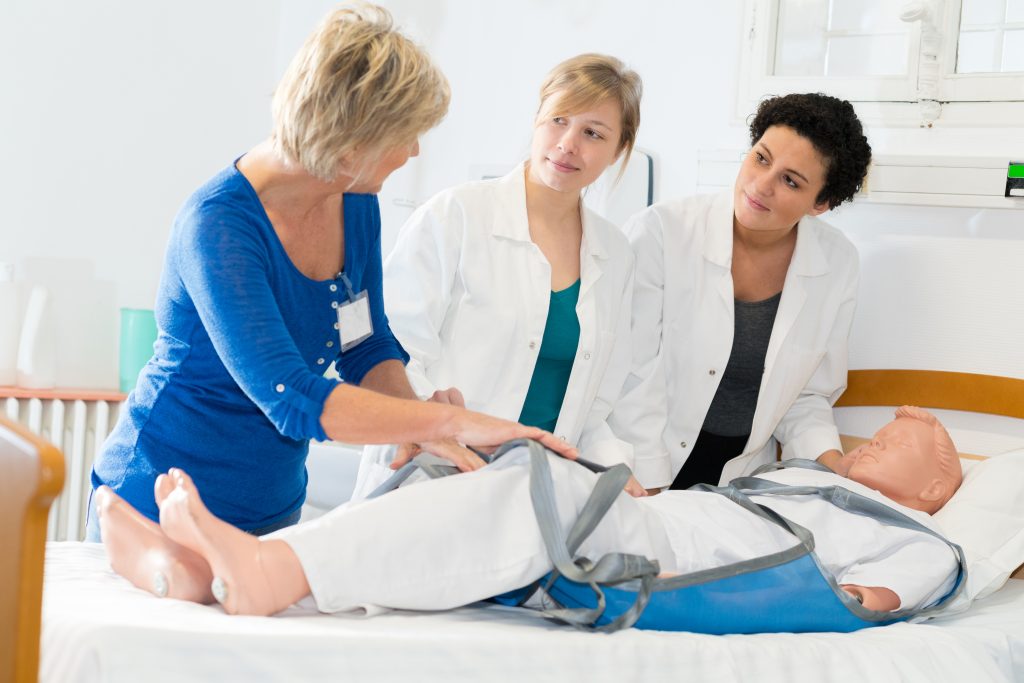
What you learn on a Cardiac First Responder course in Limerick
The course is designed to turn a stressful event into a clear, repeatable response. Training is practical because CPR and AED use are physical, time-critical skills that improve most through coached practice.
Typical learning outcomes include:
- Recognising unresponsiveness and abnormal or absent breathing
- Calling 112/999, sharing the location clearly, and following dispatcher instructions
- Performing effective chest compressions with correct hand position and rhythm
- Using an AED safely, including pad placement and following prompts
- Managing the scene: assigning roles (call, CPR, bring AED) and minimising interruptions
Most courses also include scenario practice so participants can rehearse what to do while under pressure, which helps reduce hesitation.
The simple response sequence (adult)
In a suspected adult cardiac arrest, the early steps taught in Basic Life Support are intentionally straightforward:
- Check responsiveness
- Call 112/999 (or send someone to call)
- Check breathing — if the person is not breathing normally, treat it as cardiac arrest
- Start chest compressions immediately
- Get an AED and use it as soon as it arrives, continuing CPR between prompts
If a rescuer is trained and willing to give rescue breaths, many courses teach a 30 compressions to 2 breaths pattern, keeping pauses short. If a rescuer is not trained or does not want to give breaths, compression-only CPR is still strongly preferred over doing nothing. Emergency call handlers can also provide instructions over the phone.
Who should book Cardiac First Responder training in County Limerick?
This training is suitable for individuals and groups who want on-site emergency readiness, including:
- Employers responsible for workplace first aid and safety
- Sports clubs and gyms
- Schools, childcare settings, and training centres
- Community organisations and event teams
If you already have an AED, training helps ensure it’s not just “on the wall”, but genuinely usable—people know where it is, how to turn it on, and how to follow prompts without delay.
After training: keeping your site ready
Training is the foundation, but readiness improves when the environment supports a fast response. Keep the AED visible, accessible, and signposted, and assign responsibility for sensible checks (pads and battery condition). Short refreshers can help teams stay coordinated so roles are clear: who calls, who starts CPR, and who brings the AED.
FAQ
Can an AED be used by someone without medical training?
Yes. AEDs are designed for use in emergencies and guide the rescuer with prompts. They analyse the rhythm and advise a shock only when appropriate.
What CPR rate and depth are taught for adults?
Common adult BLS teaching targets are 100–120 compressions per minute and a depth of at least 5 cm (often taught not more than 6 cm for adults), allowing full recoil.
What if I’m not confident giving rescue breaths?
Courses prioritise starting compressions promptly. Compression-only CPR is still beneficial, and emergency call handlers can support you by phone.
Ready to train your team in CPR and AED use in and around County Limerick? Visit our Training page to book, enquire about onsite delivery, or choose the right course for your workplace or group: https://safetgroup.ie/training/
Sources
HSE – First aid (overview):
https://healthservice.hse.ie/staff/health-and-safety/first-aid/
Resuscitation Council UK – Adult Basic Life Support (CPR rate/depth/recoil):
https://www.resus.org.uk/professional-library/2025-resuscitation-guidelines/adult-basic-life-support-guidelines
Irish Heart Foundation – AED information:
https://irishheart.ie/what-is-cpr/cpr-courses/aedsdefibrillators-save-lives/